
B12 · Medical & Healthcare
Stainless Steel Plates for Medical & Hygienic Applications: 304/316L Options and 5 Sub-Items
For medical and hygienic applications, we have organized five stainless steel components: commonly used 304 / 316L / 420, with thickness from 0.8–8 mm.
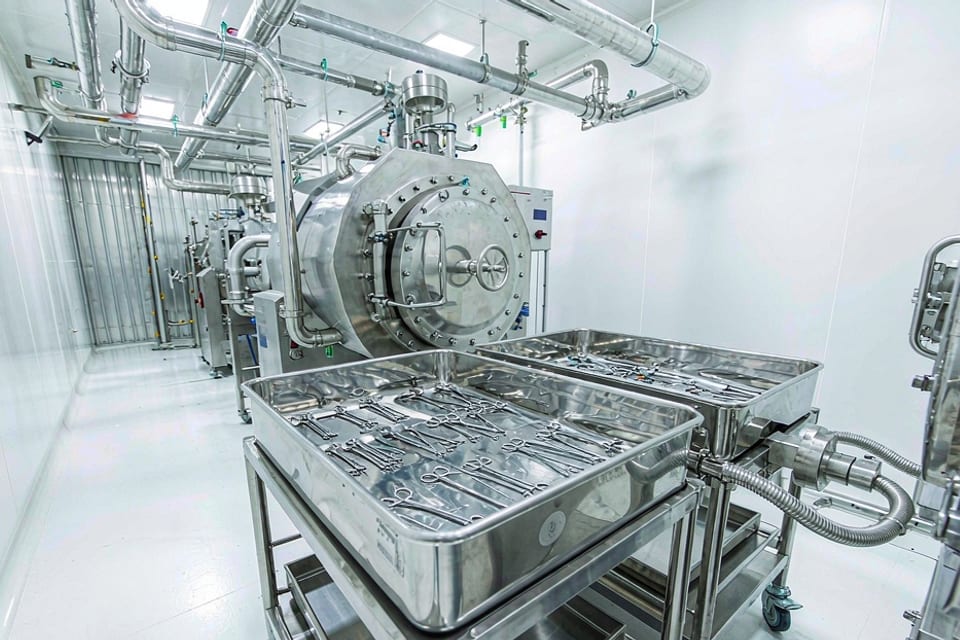
5 Components and Material List
| Part / Component | Recommended Grade | Size / Thickness | Surface | Failure Modes | Reference Standards |
|---|---|---|---|---|---|
| Bone Knife/Bone Scraper | 420Mod/40Cr13 | 3–1 mm blade thickness | Matte/Bead Blasted | 420Mod 50–58HRC; 40Cr13 470–660HV | Dull Edge+Cracking+Corrosion in Boiling Water |
| Scissors | 20Cr13/420 | 2–1 mm blade thickness | Matte or Polished | 20Cr13 40–48HRC; 420 48–56HRC | Pivot Looseness+Corrosion |
| Drill/Bone Drill | 420b/440C | φ2–8mm | Polished/Coated | 420b 48–56HRC; 440C 58–62HRC | Wear+Heat Cracks+Corrosion |
| Forceps/Suture Forceps/Grippers | 12Cr13/20Cr13/05Cr17Ni4Cu4Nb/304/316L | 1–3mm | Matte or Passivated | 38–45HRC; Hardness Difference Between Two Parts ≤ 4HRC | Spring Failure + Hinge Wear + Corrosion |
| Cabinets/Instrument Trays/Surgical Carts/Bed Frames | 304/316L | 0.8–3.0mm | 2B/Polished/Electropolished | Not Hardened by Quenching | Repeated Steam Sterilization at 134°C + Detergents + Pitting Corrosion |
The table below isStandard Configuration.Individual parts can switch from 304 to 316L or 2205 depending on operating conditions — explaining the conditions is easier than specifying grades.
Material Selection Tips
- The most common grades in this industry are 304 (2), 316L (2) and 420 (1) — the numbers in parentheses indicate the number of parts involved, useful for quoting and material ordering.
- Thickness range 0.8–8 mm: Thin plates are mainly formed parts (allowing for bending and deep-drawing cracks), thick plates are mainly welded structures (allowing for heat input and sensitization).
FAQ
Which stainless steel is most used for medical and hygienic applications?
Total of 5 items, most commonly 304 (2), 316L (2), 420 (1). For a specific part, it still depends on the medium and temperature; for example, a stainless steel countertop should switch from 304 to 316L when in contact with salt water.
Which part is most prone to failure?
Failure description, typically "bone knife/axe": 420Mod 50–58HRC; 40Cr13 470–660HV; Recommended grade: 420Mod/40Cr13, blade width 1–3mm. For this type of application, it is recommended to specify medium concentration, temperature and cleaning method at the design stage.
Which thickness should I choose?
The thickness range in the list is 0.8–8 mm.
Formability and surface for thin plates, strength for thick plates; values may vary between equipment manufacturers for the same part, review your drawing or conditions.
Applications5
Thickness0.8–8mm